← Back to Coffee Buying Guides
Last updated: October 20, 2026
Automatic vs. Semi-Automatic Espresso Machines: Which Should You Buy?
One gives you more control over making espresso. The other handles more of the work. Here’s how to decide which fits your daily routine.
Making espresso at home can be as hands-on or as convenient as you want it to be.
Some people enjoy grinding fresh coffee, preparing the portafilter, and learning how small adjustments change the result. Others want a cappuccino or espresso without spending several minutes preparing it.
That’s the essential difference between semi-automatic and fully automatic espresso machines.
Both can make enjoyable espresso. Both are available at different prices. But they offer different experiences when it comes to preparation, convenience, cleaning, and maintenance.
The question isn’t which type is more sophisticated.
It’s how much of the preparation you want to handle yourself.
The Quick Answer
Choose a semi-automatic espresso machine if you enjoy learning how to make espresso, want direct control over brewing, and don’t mind preparing and cleaning the equipment.
Choose a fully automatic espresso machine if you want espresso-based drinks with fewer manual steps and are comfortable paying more for convenience.
Neither is automatically better. The right choice depends on your preferred drinks, daily routine, budget, and interest in the preparation process.
What Is the Difference Between Automatic and Semi-Automatic Espresso Machines?
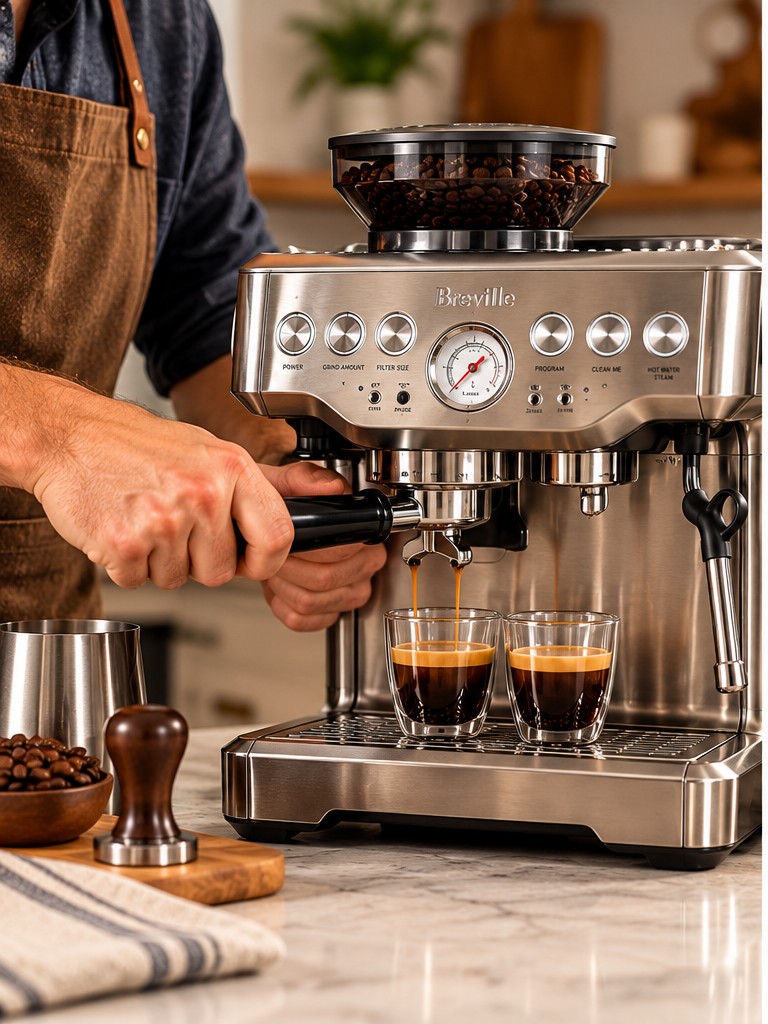
A semi-automatic espresso machine generally requires you to prepare the coffee and control at least part of the brewing process.
You’ll usually grind coffee, fill and tamp the portafilter, start the extraction, and clean the equipment afterward.
Some machines assist with grinding, dosing, tamping, or extraction, but you’re still involved.
A fully automatic espresso machine, often called a bean-to-cup machine, handles more of those steps internally.
Depending on the model, it may grind beans, measure coffee, brew espresso, and dispense the finished drink with a button press.
Some also prepare milk-based drinks automatically.
A Note About the Word “Automatic”
Espresso machine terminology can be confusing.
Some machines described as automatic still require you to grind coffee, fill a portafilter, and prepare the brewing basket. The automatic feature may simply control when the espresso extraction stops.
For this guide, we’re comparing hands-on semi-automatic machines with fully automatic bean-to-cup machines.
Understanding that distinction can prevent you from buying equipment that requires more work than you expected.
What Does Making a Morning Cappuccino Actually Involve?
Imagine preparing a cappuccino before leaving for work.
With a typical semi-automatic machine, you grind the beans, prepare and tamp the coffee, attach the portafilter, and brew the espresso.
Then you steam the milk, combine it with the espresso, and clean the portafilter and steam wand.
Once you’re familiar with the process, those steps may feel natural. But they still require your attention.
With a fully automatic machine equipped with automatic milk preparation, you may only need to select a cappuccino from the menu.
The machine handles grinding, brewing, and milk preparation.
You’ll still need to keep the water and bean containers filled, empty the used grounds, and maintain the milk system according to the manufacturer’s instructions.
The difference is the amount of work required for each drink.
If preparing coffee is something you enjoy, a semi-automatic machine may be more satisfying. If you mainly want the finished drink, a fully automatic machine may be more practical.
Does One Type Make Better Espresso?
Not necessarily.
A good semi-automatic machine, paired with a suitable grinder and careful preparation, can produce excellent espresso.
It also gives you opportunities to adjust the grind, coffee dose, and extraction.
That flexibility appeals to people who enjoy experimenting and learning how different variables affect the result.
A fully automatic machine emphasizes repeatability and convenience.
Many allow adjustments to coffee strength, grind settings, or drink volume, although the degree of control varies.
A well-designed fully automatic machine can produce espresso its owner enjoys consistently, even if it doesn’t offer the same hands-on flexibility.
Neither type guarantees better-tasting coffee.
The quality of the beans, machine design, preparation, and personal preferences all matter.
The best result isn’t necessarily the espresso that required the most effort. It’s the drink you enjoy and can comfortably prepare as often as you want.
What If You Mainly Drink Lattes or Cappuccinos?
Milk preparation deserves particular attention when choosing between these machines.
Many semi-automatic espresso machines use a steam wand that allows you to heat and texture milk yourself.
That takes practice, although some models offer assisted steaming.
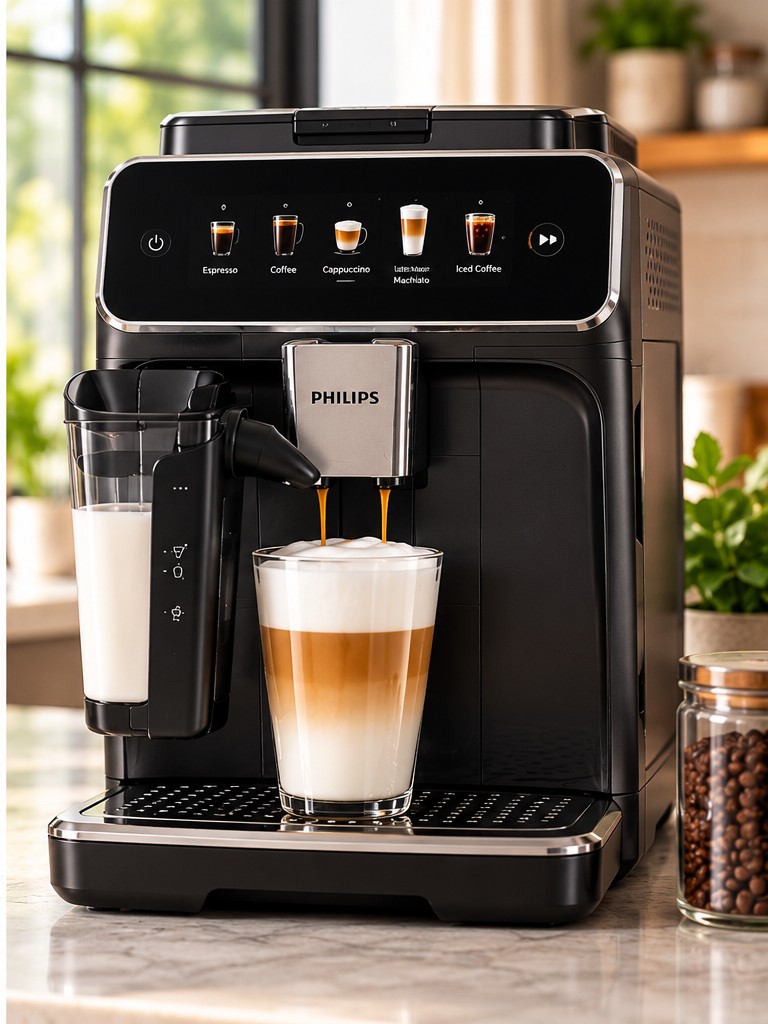
Fully automatic machines may include integrated milk systems that prepare cappuccinos or lattes with relatively little involvement.
However, not every fully automatic machine includes automatic milk preparation. Some still require you to steam or froth milk separately.
And automatic milk systems need regular cleaning.
If cappuccinos and lattes are your main reason for buying an espresso machine, compare the milk system as carefully as the brewing features.
Which Type Is Better for a Busy Household?
A fully automatic machine can be particularly convenient when several people want espresso drinks without learning the preparation process.
Household members may be able to select their preferred drinks from a menu, depending on the machine.
With a semi-automatic machine, everyone needs to become comfortable with the preparation steps—or rely on the person who already knows how to use it.
That doesn’t necessarily make a semi-automatic machine inconvenient.
Some models heat quickly and include features that simplify brewing. And someone experienced with the equipment may be able to prepare drinks efficiently.
But if several people want different drinks throughout the day, ease of operation deserves consideration.
Think about who will actually use the machine, not just who is most enthusiastic about buying it.
What Does Each Type Cost?
Both categories cover broad price ranges.
Semi-automatic machines are available at relatively affordable prices, although more capable models can cost well over $1,000.
Fully automatic machines often cost more than basic semi-automatic models because they integrate grinding, brewing, and sometimes milk preparation into one system.
But comparing sticker prices can be misleading.
A semi-automatic machine may require a separate grinder, while a fully automatic machine generally includes one.
For example, a $500 semi-automatic machine paired with a $250 grinder represents a $750 equipment purchase.
A $900 fully automatic machine may include grinding and brewing in one appliance.
Those examples don’t establish which is better value. They illustrate why you should compare complete setups.
You should also consider cleaning supplies, water filters, replacement parts, and potential repair costs.
Pay for the amount of control or convenience you actually want—not simply for the machine with the longest feature list.
Which Type Is Easier to Clean and Maintain?
Neither type is maintenance-free.
With a semi-automatic machine, you’ll generally empty and rinse the portafilter, clean the steam wand after milk preparation, and perform periodic cleaning and descaling as required.
Much of that routine is visible and accessible.
A fully automatic machine handles brewing internally and collects used coffee grounds in a container.
You’ll need to empty that container, clean the drip tray, and maintain the brewing and milk systems according to the manufacturer’s instructions.
Some fully automatic machines have removable brew groups. Others rely on automated cleaning programs and periodic service procedures.
Automatic cleaning programs can reduce hands-on work, but they don’t eliminate maintenance.
Before buying either type, consider:
- How often the machine needs cleaning
- Whether brewing components are accessible
- What cleaning products or filters are required
- How much attention the milk system needs
- Whether replacement parts and service are available
A machine that’s convenient to operate but frustrating to maintain may not be the right purchase.
When a Semi-Automatic Espresso Machine Makes Sense
I would lean toward a semi-automatic machine if:
- You enjoy learning how espresso is prepared.
- You want direct control over brewing.
- You’re comfortable using a grinder and portafilter.
- You don’t mind practicing milk steaming.
- You prefer a hands-on coffee routine.
A semi-automatic machine can be satisfying if preparing coffee is something you enjoy rather than simply a task you want completed.
However, there’s no reason to choose one just because it offers more control.
If you don’t expect to use that control, its advantages may have little practical value.
When a Fully Automatic Espresso Machine Makes Sense
I would consider a fully automatic machine if:
- You want espresso or café-style drinks with fewer preparation steps.
- You prefer repeatable drink settings.
- Several household members want to prepare drinks easily.
- You’re comfortable paying more for automation.
- You’re willing to follow the machine’s cleaning and maintenance requirements.
Fully automatic machines can be particularly appealing to households that enjoy espresso drinks but have little interest in learning traditional preparation techniques.
The additional convenience can be worthwhile when you use it regularly.
Automatic vs. Semi-Automatic: A Practical Comparison
| What matters | Semi-automatic | Fully automatic |
|---|---|---|
| Hands-on preparation | More involvement | Less involvement |
| Brewing control | Generally greater | Usually more limited |
| Learning required | Often more | Generally less |
| Built-in grinder | Depends on model | Usually included |
| Milk preparation | Often manual or assisted | Manual or automated, depending on model |
| Initial equipment cost | Can be lower | Often higher |
| Cleaning | Frequent, accessible tasks | Automated routines plus internal maintenance |
| Best suited for | People who enjoy the process | People who prioritize convenience |
Espresso Machines Worth Considering
Once you’ve decided how much involvement you want, the next step is comparing machines that fit your routine.
Rather than recommending a long list, we’ll focus on four types of buyers.
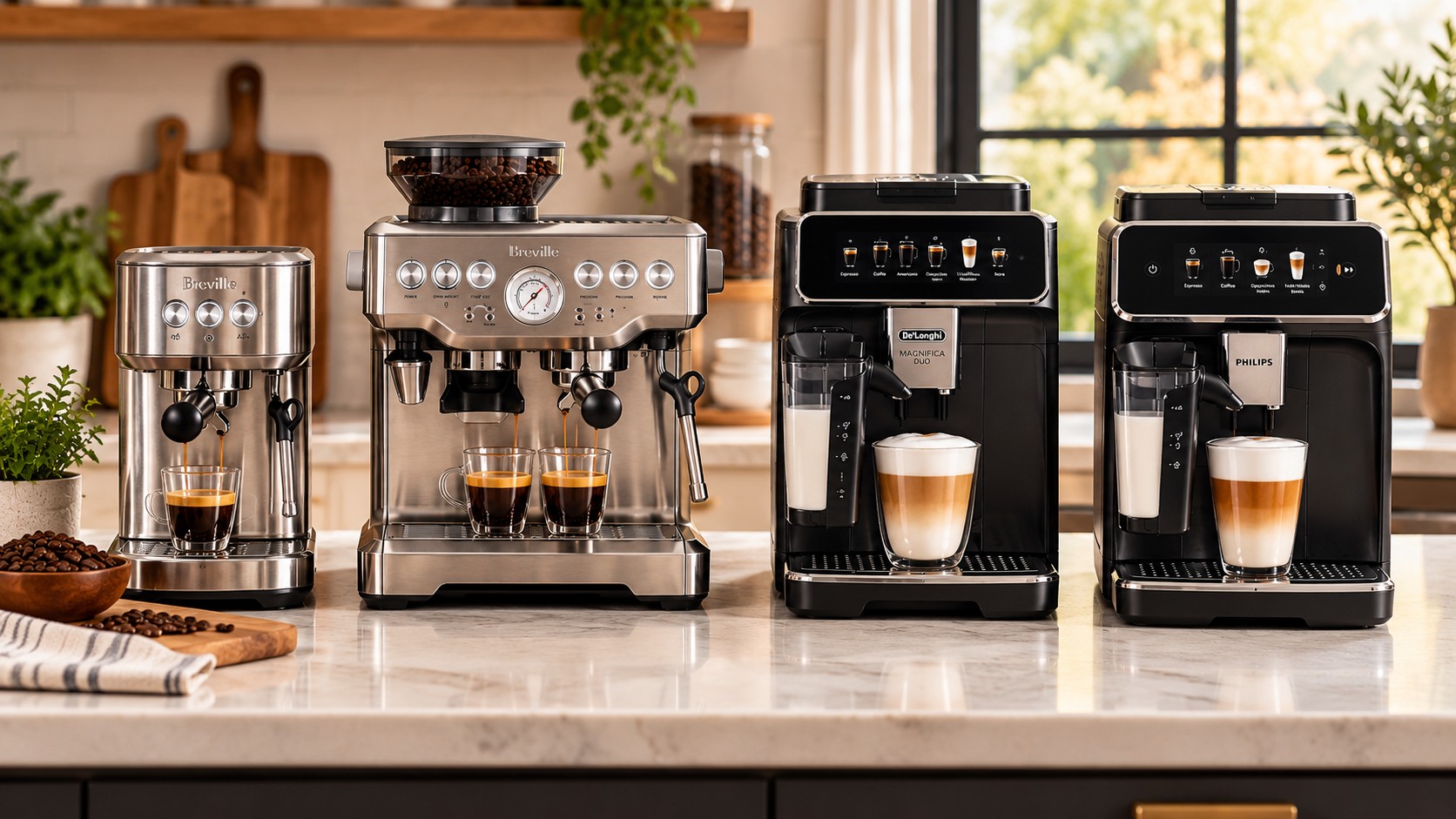
An Affordable Semi-Automatic Espresso Machine
Best for: Someone interested in learning traditional espresso without making a large initial investment.
What matters: Straightforward controls, usable milk steaming, manageable cleaning, and the cost of a suitable grinder.
Selected machine: Breville Bambino BES450BSS. This compact semi-automatic machine offers hands-on espresso preparation and manual milk steaming. It does not include a grinder, so budget separately for a suitable espresso grinder. View the Breville Bambino on Amazon.
A Semi-Automatic Machine With Helpful Features
Best for: Someone who wants hands-on espresso preparation with conveniences that simplify the routine.
What matters: Brewing controls, assisted preparation features, grinder requirements, and everyday usability.
Selected machine: Breville Barista Express BES870XL. This semi-automatic model integrates a grinder while keeping grinding adjustments, portafilter preparation, extraction, and milk steaming largely hands-on. Its integrated grinder saves counter space but does not make it a one-touch machine. View the Breville Barista Express on Amazon.
A Fully Automatic Machine for Everyday Espresso
Best for: Someone who wants regular espresso drinks with minimal preparation.
What matters: Drink quality, ease of operation, available settings, cleaning, and long-term ownership costs.
Selected machine: De’Longhi Magnifica Duo Automatic Espresso Machine. A bean-to-cup model with integrated grinding and automated drink preparation. It reduces the daily preparation steps but still requires regular cleaning and attention to the brewing and milk systems. View the De’Longhi Magnifica Duo on Amazon.
A Fully Automatic Machine for Milk-Based Drinks
Best for: A household that frequently enjoys cappuccinos, lattes, and other milk-based drinks.
What matters: Milk preparation, drink selection, consistency, and cleaning requirements.
Selected machine: Philips 3300 Series LatteGo (EP3341/50). This fully automatic model combines integrated grinding with a LatteGo milk system and a selection of hot and iced drinks. Its appeal is straightforward milk-drink preparation; check cleaning requirements and drink options before buying. View the Philips 3300 LatteGo on Amazon.
These examples represent different daily routines, not a ranking by price. Product prices, availability, sellers, and return policies can change; check the listing before purchasing.
Five Questions to Ask Before Buying
- Do I enjoy preparing coffee, or do I mainly want the finished drink? This is the most important distinction.
- What drinks will I make most often? Straight espresso and milk-based drinks may call for different features.
- How much time do I want to spend preparing and cleaning up? Consider the complete routine.
- What’s my total equipment budget? Include a grinder if necessary, along with accessories and maintenance.
- Will other people use the machine? A fully automatic model may be easier for a household with different preferences or experience levels.
Our Recommendation
If you’re interested in learning how to make espresso and enjoy having control over the process, I would begin by comparing semi-automatic machines.
They offer a hands-on way to prepare coffee, with options available at different budgets.
If you primarily want espresso, cappuccinos, or lattes without managing the preparation yourself, I would lean toward a fully automatic machine.
The additional expense may be justified by convenience you’ll use every day.
And if you’re uncertain, think about your typical weekday morning rather than an idealized weekend spent experimenting with coffee.
Choose the machine that fits how you actually want to make coffee—not the one that asks you to change your routine to justify buying it.
Related Guides
- How Much Should You Spend on an Espresso Machine?
- Espresso Machine vs. Coffee Maker
- Is an Expensive Coffee Maker Worth It?
As an Amazon Associate, Coffee for Real Life earns from qualifying purchases.
Keep exploring: Browse all Coffee Buying Guides