← Back to Coffee Buying Guides
Last updated: October 20, 2026
Espresso Machine vs. Coffee Maker: Which Is Right for Your Daily Routine?
Two different ways to make coffee at home. Here’s how to decide which one fits what you drink, how you spend your mornings, and what you’re comfortable spending.
Choosing between a regular coffee maker and an espresso machine isn’t necessarily a question of which one makes better coffee. It’s a question of which one makes the coffee you actually want to drink.
Maybe you’re buying your first coffee machine and wondering whether an espresso maker is worth the additional expense. Or perhaps you’ve enjoyed traditional drip coffee for years and are curious about making cappuccinos, lattes, or espresso at home.
Either way, the decision involves more than taste. Your morning routine, household needs, available space, and budget all matter.
A good drip coffee maker can be exactly the right choice. So can an espresso machine.
The Quick Answer
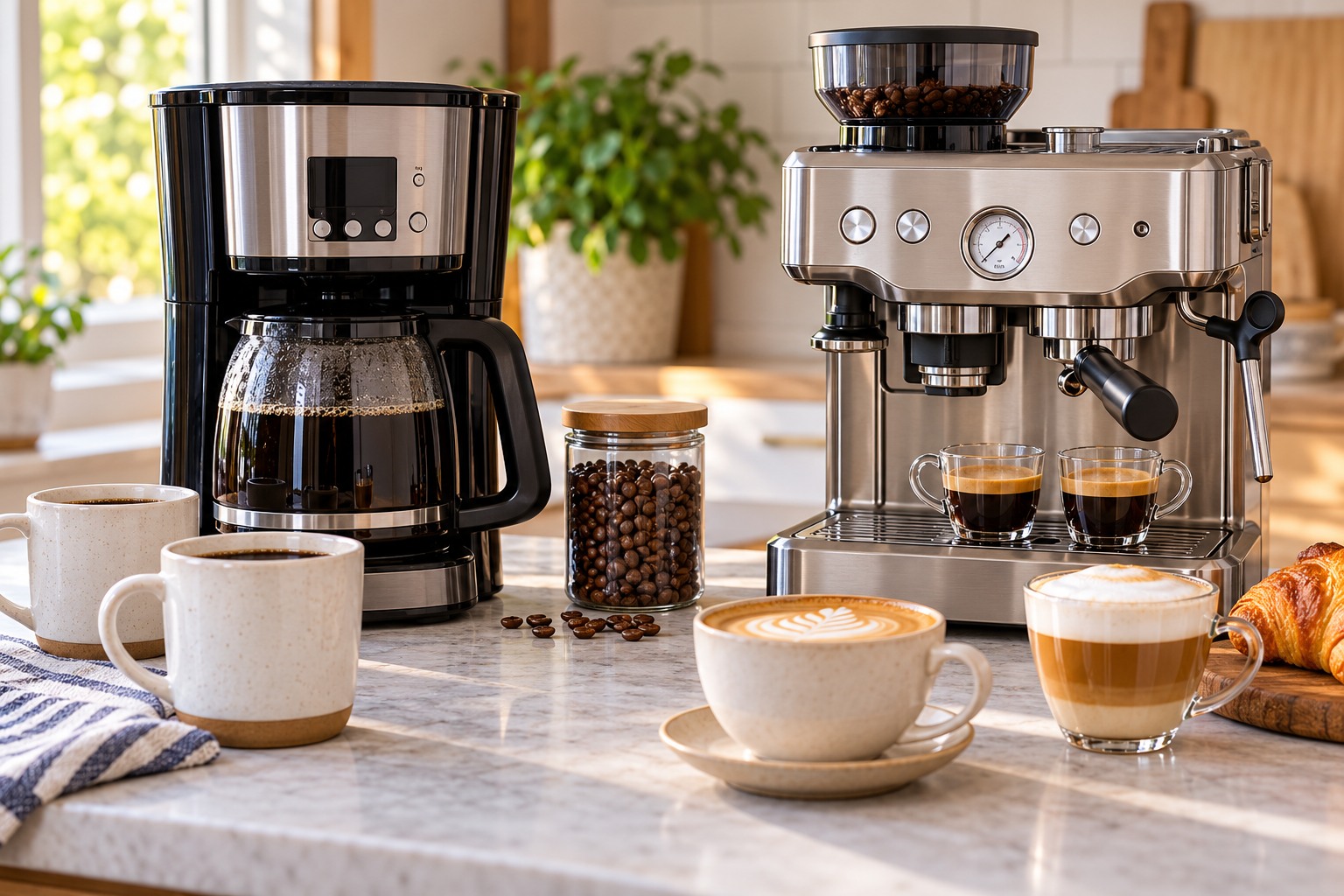
Choose a drip coffee maker if you enjoy traditional coffee, regularly drink full mugs, or want a convenient way to prepare several cups.
Consider an espresso machine if you prefer espresso, cappuccinos, or lattes and want to make those drinks at home.
Neither is automatically better. The right choice depends on what you drink and how you want to prepare it.
What Is the Difference Between Drip Coffee and Espresso?
A traditional drip coffee maker uses hot water to extract flavor from ground coffee as it passes through a filter. The result is the familiar cup of coffee many people enjoy with breakfast or throughout the morning.
Drip coffee makers are particularly convenient when you want a full mug or several cups at once.
An espresso machine works differently.
It uses pressure to push hot water through finely ground coffee, producing a small, concentrated serving of espresso. That espresso can be enjoyed on its own or used to prepare cappuccinos, lattes, Americanos, and other café-style drinks.
The difference isn’t simply that espresso is stronger.
Espresso is more concentrated, with a fuller body and a different texture. A traditional serving is much smaller than a typical mug of drip coffee.
Drip coffee generally produces a lighter-bodied drink intended to be enjoyed in a larger serving.
Both methods can produce excellent coffee. They simply offer different drinking experiences.
And while espresso contains more caffeine per ounce, a full mug of drip coffee may contain more total caffeine than a single espresso shot.
Start With the Coffee You Actually Enjoy
Before comparing equipment, think about the coffee you drink most often.
If you enjoy a large mug of traditional coffee in the morning, a drip coffee maker is probably the more natural choice.
An espresso machine makes more sense when espresso-based drinks are part of your routine.
If you regularly order cappuccinos, lattes, flat whites, or espresso at a café, preparing those drinks at home may be appealing.
But there’s an important distinction.
Enjoying a latte at your favorite coffee shop doesn’t automatically mean you’ll enjoy making one every morning.
Depending on the machine, preparing espresso drinks may involve grinding coffee, preparing the brewing basket, extracting espresso, steaming milk, and cleaning several components afterward.
Some people enjoy that process. Others would rather have their coffee ready with the push of a button.
The question is whether you’re interested in the drinks, the preparation process, or both.
Can You Make Regular Coffee With an Espresso Machine?
An espresso machine can prepare an Americano by combining espresso with hot water. The result is a larger, less concentrated drink that may appeal to someone accustomed to regular coffee.
But an Americano isn’t identical to drip coffee.
The brewing methods differ, and so can the flavor and texture.
Some fully automatic espresso machines offer drinks labeled coffee or long coffee. Depending on the model, these may use a different preparation process from traditional drip brewing.
If you primarily enjoy regular coffee served in a large mug, don’t assume an espresso machine will produce exactly the same experience.
A good drip coffee maker may still be the better choice.
And if you enjoy both styles, keeping your existing coffee maker and adding an espresso machine later may be more practical than replacing one with the other.
Your Morning Routine Matters
Consider what happens in your kitchen on a typical weekday.
Are you making coffee while preparing breakfast or getting ready for work? Or do you enjoy taking a few minutes to prepare a particular drink?
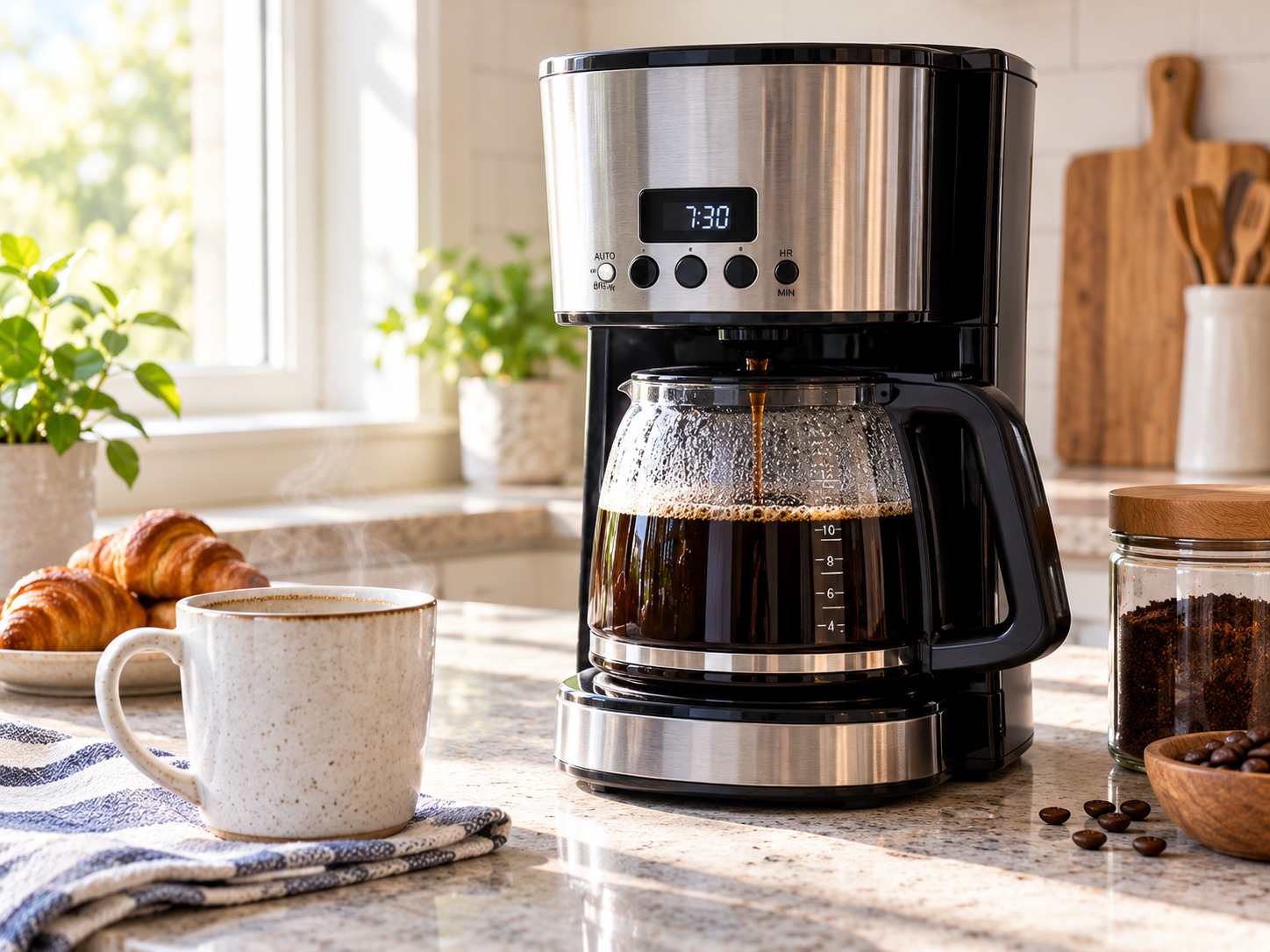
A conventional drip coffee maker is often easier to incorporate into a busy routine.
You add water and ground coffee, start the machine, and let it brew. Some models can even be programmed the night before.
Once brewing is finished, several cups may be ready to serve.
A semi-automatic espresso machine generally requires more involvement. You’ll prepare the coffee, operate the machine, and clean the brewing components afterward.
A fully automatic espresso machine can simplify much of that work, sometimes grinding beans and preparing espresso at the touch of a button. Some models also automate milk preparation.
The trade-off is usually a higher purchase price and additional maintenance.
The question isn’t whether you have enough time to make espresso. It’s whether making espresso fits the way you want to spend that time.
How Much Coffee Does Your Household Drink?
Household size can influence this decision as much as personal preference.
For a household where several people enjoy traditional coffee, a drip coffee maker offers an obvious advantage. You can prepare multiple cups in one brewing cycle without making each drink individually.
Espresso machines generally prepare individual servings, although some can extract two shots together.
If several people want cappuccinos or lattes, preparing those drinks may take longer than brewing a pot of coffee.
On the other hand, a household with different preferences may benefit from espresso equipment.
One person might enjoy a cappuccino, another an Americano, and someone else a straight espresso.
There is also no requirement that a household choose only one brewing method.
If you already own a reliable drip coffee maker, adding an espresso machine later may make more sense than replacing equipment that still meets your needs.
What Does Each Option Really Cost?
The purchase price is only the beginning.
A basic drip coffee maker may cost less than $50, while higher-performance models can cost $150, $250, or considerably more.
More expensive drip machines may offer improved brewing-temperature consistency, better water distribution, thermal carafes, or additional convenience features.
Espresso equipment covers an even wider price range.
Entry-level machines may cost a few hundred dollars, while more capable semi-automatic and fully automatic machines can reach $1,000 or more.
And the machine may not be your only purchase.
Depending on the equipment, you may need a suitable grinder, milk pitcher, scale, or other accessories.
Espresso machines also require regular cleaning and, in many cases, more involved maintenance than a basic drip brewer.
Think About the Total Cost
Before making a purchase, consider:
- The machine: What does the equipment itself cost?
- Additional equipment: Will you need a grinder or accessories?
- Coffee and ingredients: What will you spend on beans, milk, or capsules?
- Maintenance: Are there cleaning products, filters, or replacement parts?
- Frequency of use: Will you use the machine daily or only occasionally?
Will Making Espresso at Home Save Money?
It can, particularly if you’re replacing frequent purchases of café drinks.
But the savings depend on how often you use the machine, the drinks you make, and the cost of equipment and ingredients.
A $700 espresso setup used every day may eventually cost less than buying a café latte every morning.
The same setup used twice a month is a different financial proposition.
And if you already enjoy inexpensive drip coffee at home, switching to espresso is unlikely to save money.
It would be a decision to enjoy a different kind of coffee.
That’s a reasonable reason to buy an espresso machine, provided you understand what you’re paying for.
Is Espresso Difficult to Make at Home?
Not necessarily, but the answer depends on the machine.
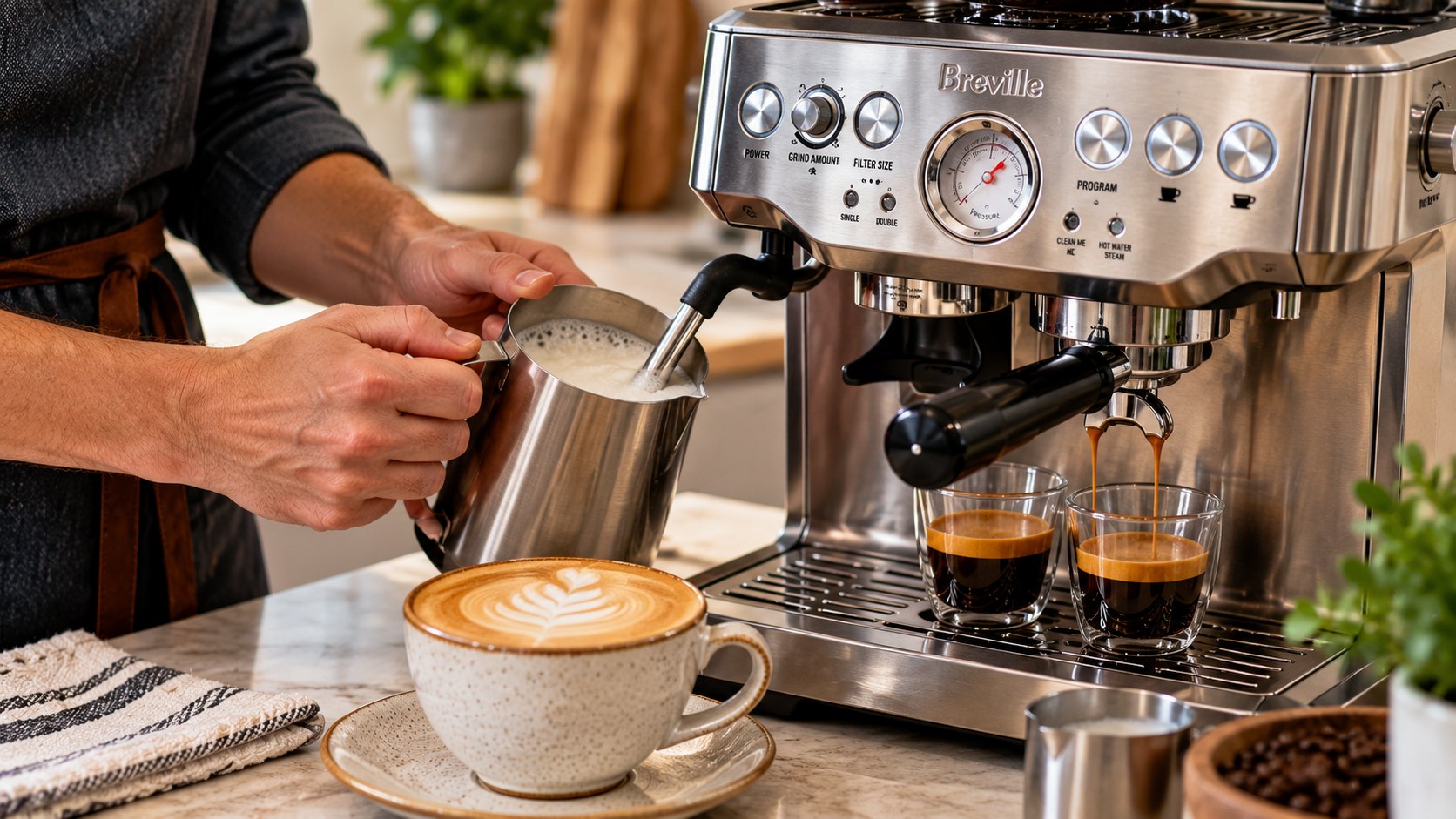
Traditional semi-automatic espresso machines involve a learning process.
You’ll need to understand how finely to grind coffee, how much to use, and how to adjust preparation to produce the results you enjoy.
Making consistently good espresso can take practice.
For some people, that’s part of the attraction. They enjoy learning, experimenting, and developing a routine that produces a drink exactly the way they like it.
Other people want espresso without turning coffee preparation into a hobby.
Fully automatic machines are designed with those buyers in mind. They can simplify grinding, brewing, and sometimes milk preparation.
Capsule-based espresso systems offer another convenient approach, although they introduce different considerations involving capsule costs, drink options, and ongoing waste.
You don’t need to become a coffee enthusiast to enjoy espresso at home.
You do, however, need equipment that matches the amount of involvement you’re comfortable with.
When a Regular Coffee Maker Is the Better Choice
I would lean toward a drip coffee maker if:
- You primarily enjoy regular coffee served in a full mug.
- You frequently prepare coffee for two or more people.
- You want a straightforward morning routine.
- You prefer minimal preparation and cleanup.
- You want dependable coffee without making a substantial equipment investment.
There is no reason to move away from a coffee maker that already meets your needs simply because espresso machines offer more features or cost more money.
And if you want better-tasting traditional coffee, improvements in fresh beans, grinding, water quality, and brewing consistency may be more relevant than purchasing an espresso machine.
When an Espresso Machine Makes Sense
I would consider an espresso machine if:
- You regularly enjoy espresso, cappuccinos, lattes, or other espresso-based drinks.
- You want to prepare those drinks at home rather than visit a café.
- You’re comfortable with the additional equipment and maintenance.
- You enjoy the preparation process, or you’re willing to pay more for automation.
- You expect to use the machine often enough to justify its cost.
An espresso machine can be a satisfying addition to a kitchen, especially for someone who genuinely enjoys espresso-based drinks.
But it should solve a real need or satisfy an established preference.
It doesn’t need to be an expensive reward for becoming a more serious coffee drinker.
Espresso Machine vs. Coffee Maker: At a Glance
| Consideration | Drip Coffee Maker | Espresso Machine |
|---|---|---|
| Best for | Traditional mugs of coffee | Espresso and espresso-based drinks |
| Serving size | Full mugs or multiple cups | Individual concentrated servings |
| Morning convenience | Usually simple and hands-off | Depends on machine and automation |
| Learning curve | Generally minimal | Can be significant for semi-automatic models |
| Equipment cost | Often lower | Often higher, especially with accessories |
| Cleanup | Usually straightforward | More components and regular maintenance |
| Household use | Convenient for several coffee drinkers | Flexible drink choices, often made individually |
Two Machines Worth Comparing
These examples illustrate two different approaches to making coffee at home. They aren’t interchangeable machines, and neither is automatically the right purchase for every household.
For Traditional Drip Coffee: Technivorm Moccamaster KBGV Select
The Technivorm Moccamaster KBGV Select 10-Cup Coffee Maker is an example of a premium drip brewer designed for people who regularly enjoy traditional coffee.
It makes more sense for someone who values a straightforward brewing process and wants to prepare several cups than for someone primarily interested in cappuccinos or lattes.
Its higher price is worth considering carefully. You don’t need to spend this much to make enjoyable drip coffee.
View the Technivorm Moccamaster KBGV Select on Amazon
For Espresso-Based Drinks: De’Longhi Dedica Arte
The De’Longhi Dedica Arte EC885M is a compact semi-automatic espresso machine intended for preparing espresso and milk-based drinks at home.
It may appeal to someone who wants to learn the preparation process without committing to a much larger machine.
Keep in mind that semi-automatic espresso involves more hands-on preparation, and a suitable grinder may be an additional expense.
View the De’Longhi Dedica Arte on Amazon
These products are examples, not a reason to spend more than your routine requires.
The Bottom Line
A drip coffee maker and an espresso machine serve different purposes.
If your ideal morning involves a familiar mug of coffee with minimal effort, a dependable drip brewer may be exactly what you need.
If you genuinely enjoy espresso, cappuccinos, and lattes, an espresso machine can make those drinks part of your routine at home.
And if you enjoy both, you don’t necessarily have to choose one at the expense of the other.
Buy for the coffee you actually drink, not for the machine you think you’re supposed to own.
Related Guides
- How Much Should You Spend on an Espresso Machine?
- Automatic vs. Semi-Automatic Espresso Machines
- Is an Expensive Coffee Maker Worth It?
As an Amazon Associate, Coffee for Real Life earns from qualifying purchases.
Keep exploring: Browse all Coffee Buying Guides