← Back to Coffee Buying Guides
Last updated: October 20, 2026
How Much Should You Spend on an Espresso Machine?
From affordable entry-level machines to premium equipment, here’s what your money buys—and how to decide what makes sense for your daily coffee routine.
You can buy an espresso machine for less than $200. You can also spend $1,000, $2,000, or considerably more.
So how much do you actually need to spend to make espresso at home?
That depends on the drinks you enjoy, how involved you want to be in preparing them, and how often you’ll use the machine.
Someone who enjoys an occasional cappuccino may need very different equipment from someone who prepares several espresso drinks every morning.
And someone who wants espresso at the push of a button may value convenience more than someone who enjoys learning the brewing process.
The goal isn’t to find the cheapest machine or the most impressive one.
It’s to find the equipment that meets your needs without paying for capabilities you won’t use.
The Quick Answer
If you’re interested in traditional home espresso with a semi-automatic machine, approximately $300–$700 is a useful price range to begin comparing equipment.
But that isn’t a minimum requirement. Affordable machines and capsule systems may suit some buyers perfectly well.
Spending more can provide better controls, more convenient operation, improved construction, or additional automation. A higher price, however, doesn’t automatically mean better espresso.
Most importantly, budget for the complete setup—not just the machine. A separate grinder, accessories, and ongoing maintenance can make a meaningful difference in what you ultimately spend.
First, Decide What Kind of Machine You Want
Before setting a budget, understand the three main approaches to making espresso at home.
Semi-Automatic Espresso Machines
These machines involve you in the preparation process.
You’ll generally grind coffee, prepare the portafilter, operate the machine, and clean the equipment afterward. Some models automate portions of that work.
Semi-automatic machines appeal to people who enjoy learning how to make espresso and want control over the results.
They can offer good value, although a separate grinder may be necessary.
Fully Automatic Espresso Machines
Often called bean-to-cup machines, these models automate much of the preparation.
Depending on the machine, they may grind beans, brew espresso, and prepare milk-based drinks.
They’re appealing if you want espresso or cappuccinos without managing every step yourself.
The trade-off is often a higher purchase price and additional cleaning or maintenance requirements.
Capsule Espresso Systems
Capsule machines generally emphasize convenience and straightforward operation.
They can be appealing for occasional espresso drinks or households that prefer minimal preparation.
However, capsule costs, drink selection, and ongoing waste deserve consideration.
Not every capsule system uses the same brewing process as a traditional espresso machine, so compare the drinks each system actually produces.
What Can You Expect at Different Prices?
These ranges are general shopping guidelines, not guarantees of performance. Features overlap, and price alone isn’t a reliable measure of quality.
Under $200: Affordable Ways to Begin
This category includes entry-level machines and capsule-based systems.
It may be appropriate if you’re working with a limited budget or want to explore espresso drinks without a major investment.
Traditional espresso machines at this price can involve compromises in temperature stability, controls, milk steaming, or construction.
A suitable grinder may also increase the overall expense.
Focus on what the machine can realistically prepare and whether it matches your expectations.
$200–$500: Entry-Level Traditional Espresso
This is a useful range for comparing semi-automatic espresso machines.
Some provide straightforward controls and the essential equipment needed to begin learning the process.
Pay attention to brewing consistency, ease of operation, milk steaming, and cleaning.
Also consider whether the machine includes a grinder or requires a separate purchase.
A relatively simple machine can be a good choice if you’re willing to learn how to use it.
$500–$1,000: More Features and Convenience
In this range, you may find improved controls, integrated grinders, assisted preparation features, and more capable milk-steaming systems.
Some machines emphasize hands-on espresso preparation. Others focus on making the process easier.
This range may be worthwhile if you make espresso drinks regularly and can identify features that would improve your routine.
But don’t pay for automation or specialized controls unless you expect to use them.
$1,000–$1,500: More Specialized Choices
At this level, you may encounter more sophisticated semi-automatic machines and fully automatic models offering additional drink options.
Some provide greater control over brewing. Others offer more automation.
If you’re making several drinks every day, improvements in workflow and convenience may be meaningful.
For occasional use, a less expensive machine may be entirely sufficient.
Above $1,500: Premium Equipment
Premium machines may offer advanced brewing controls, more capable heating systems, greater automation, or construction intended for demanding use.
Some are designed for enthusiasts who enjoy adjusting the brewing process.
Others are designed for people who want a variety of drinks with minimal involvement.
Those are different purchasing priorities.
Before spending this much, make sure the machine’s particular advantages matter to you.
Espresso Machine Budget Comparison
| Machine budget | What to investigate | Best suited for |
|---|---|---|
| Under $200 | Basic machines and capsule systems | Limited budgets or occasional use |
| $200–$500 | Entry-level semi-automatic machines | Learning traditional espresso |
| $500–$1,000 | Additional controls and convenience | Regular home espresso preparation |
| $1,000–$1,500 | Advanced features and automation | Frequent use and particular preferences |
| Above $1,500 | Specialized or premium equipment | Enthusiasts or households with specific needs |
These are machine-price ranges, not complete setup budgets. A grinder and other equipment may increase the amount you need to spend.
Don’t Forget the Grinder
One common budgeting mistake is comparing espresso machines without considering how the coffee will be ground.
Traditional espresso generally requires a suitable, consistent grind.
If you’re buying a semi-automatic machine without an integrated grinder, you may need to purchase one separately.
That can add substantially to your overall budget.
For example, a $400 espresso machine paired with a $200 grinder becomes a $600 equipment purchase before adding accessories or coffee.
A $600 machine with an integrated grinder might require less additional equipment, although that doesn’t automatically make it the better choice.
Compare the complete setup rather than the machine alone.
Capsule systems and fully automatic machines with integrated grinders have different equipment requirements.
If You Mainly Want Lattes or Cappuccinos
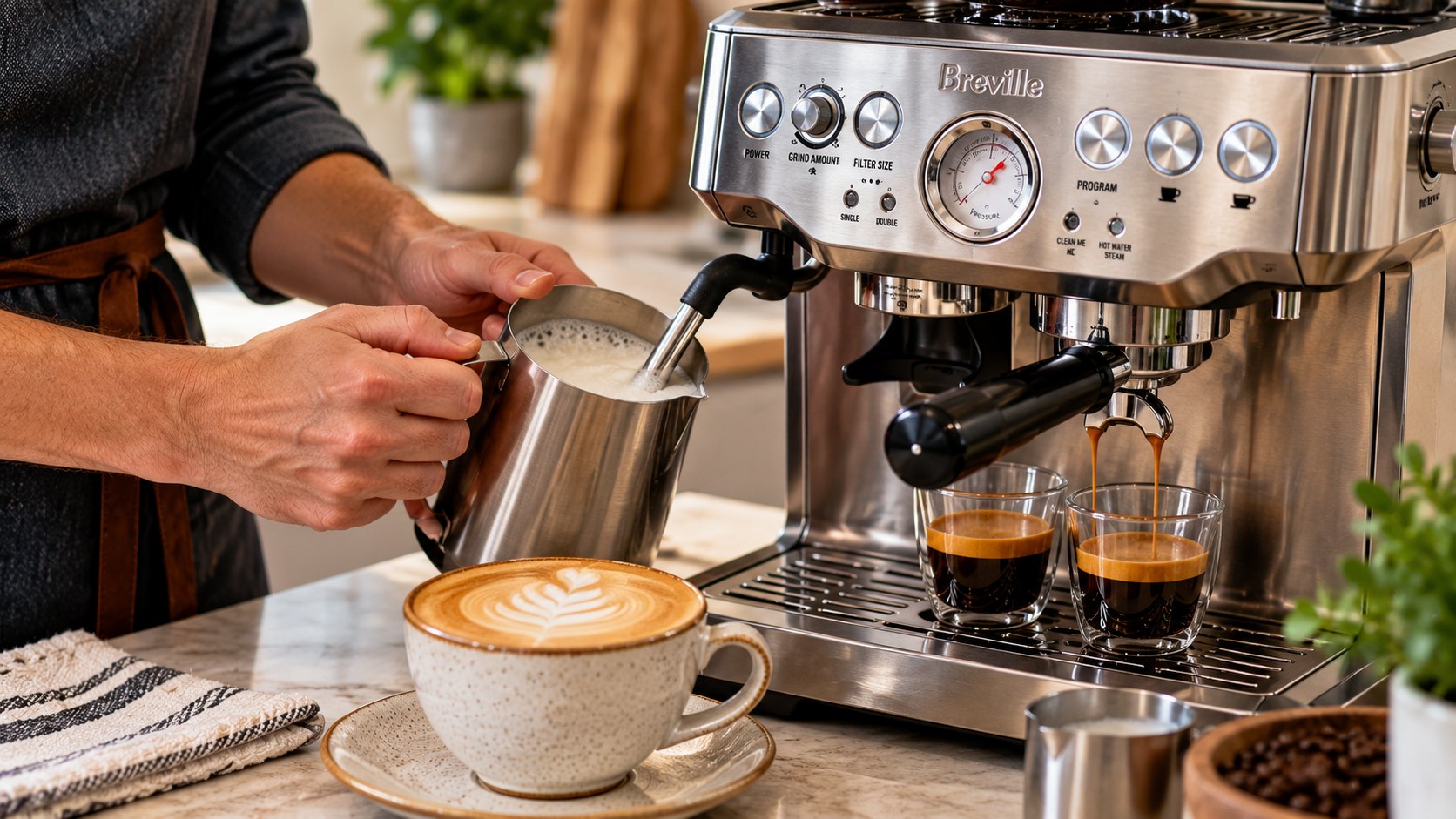
If milk-based drinks are your main interest, pay particular attention to how the machine prepares milk.
Some espresso machines use a traditional steam wand that requires practice.
Others offer assisted steaming or automated milk preparation.
A steam wand may appeal to someone who enjoys learning how to texture milk.
An automated system may suit someone who wants a cappuccino with less involvement.
Neither approach is inherently better.
But paying for advanced espresso controls while overlooking milk preparation may leave you with a machine that doesn’t fit your preferences.
If you make several milk-based drinks regularly, cleaning and maintenance should also influence your decision.
Is a $1,000 Espresso Machine Worth It?
It can be, but only when the additional expense provides something meaningful.
A $1,000 machine may offer more convenient preparation, better controls, an integrated grinder, or features that make daily use easier.
It may also include capabilities that someone making occasional espresso drinks would rarely use.
Before spending that much, ask what the machine will do for you.
Will it simplify your mornings?
Will it give you greater control over a process you enjoy?
Will it accommodate the drinks your household prepares?
If the advantages are clear, the purchase may be reasonable.
If not, a less expensive machine may be the smarter choice.
Consider the Total Cost of Ownership
The purchase price isn’t the only expense.
Depending on the equipment, ongoing costs may include:
- Coffee beans or capsules
- Milk and other ingredients
- Cleaning and descaling supplies
- Water filters
- Replacement parts
- Maintenance or repairs
Capsule systems may have lower initial equipment costs but higher coffee costs per drink, depending on the products compared.
Traditional espresso equipment may require a larger initial investment but provide more flexibility in choosing beans.
A machine that seems affordable initially may become more expensive over several years if supplies or maintenance are costly.
The better value depends on how often you use the equipment and what it costs to operate.
Espresso Machines Worth Considering at Different Budgets
Once you’ve established a comfortable budget, the next step is comparing a few machines that match your preferences.
We recommend choosing equipment based on the drinks you enjoy and how you want to prepare them—not simply on price.
An Affordable Espresso Machine for Occasional Use
Best for: Someone who wants to explore espresso drinks without a large initial investment.
What matters: Straightforward operation, realistic brewing expectations, and manageable cleaning.
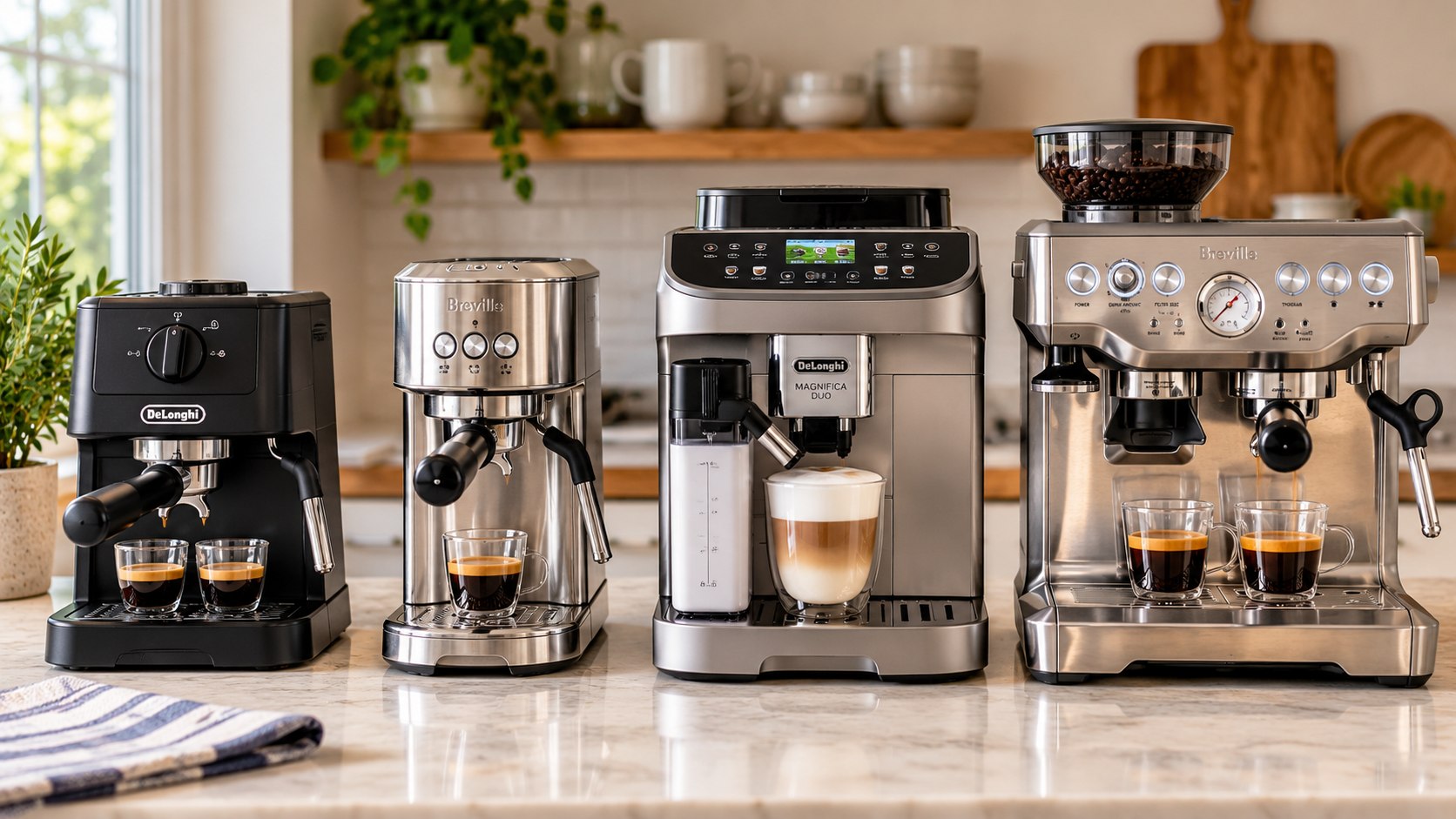
Selected machine: De’Longhi Stilosa Compact Manual Espresso Machine. An affordable hands-on option for exploring espresso and milk-based drinks. It uses a manual steam wand and does not include a built-in grinder, so consider grinder costs and the practice involved. View the De’Longhi Stilosa on Amazon.
A Midpriced Semi-Automatic Espresso Machine
Best for: Someone who wants to prepare espresso regularly and is comfortable learning the process.
What matters: Brewing consistency, usable controls, milk-steaming capability, and the total cost of a suitable grinder.
Selected machine: Breville Bambino BES450BSS. A compact semi-automatic machine for someone who wants to learn espresso preparation, with fast heating and manual milk steaming. A suitable espresso grinder is an additional expense. View the Breville Bambino on Amazon.
A Convenient Espresso Machine for Everyday Drinks
Best for: Someone who enjoys espresso-based drinks frequently but prefers less hands-on preparation.
What matters: Automation, drink selection, cleaning requirements, and ease of daily operation.
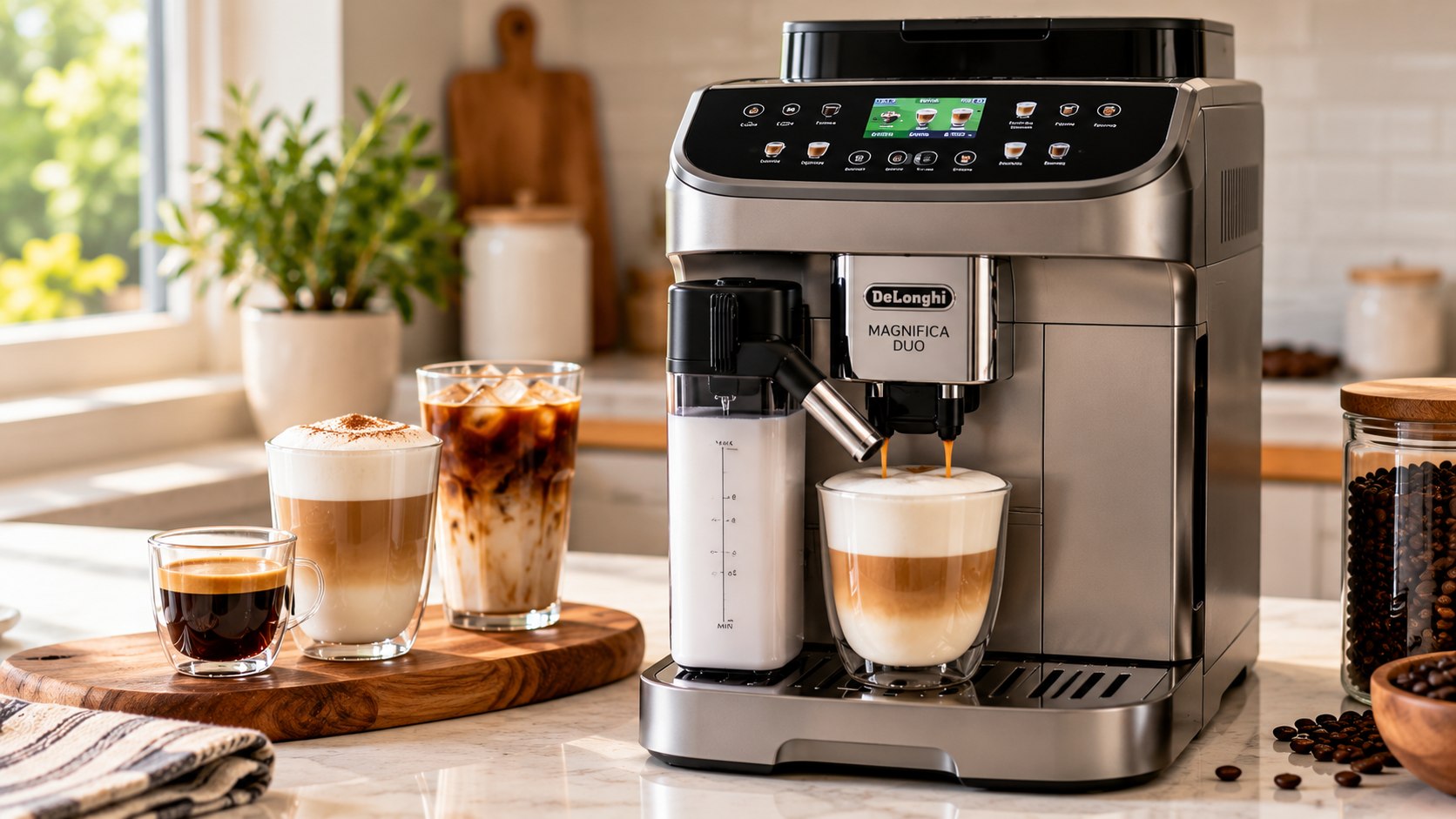
Selected machine: De’Longhi Magnifica Duo Automatic Espresso Machine. A bean-to-cup choice with integrated grinding and automated drink preparation, including milk-based options. The trade-offs are a higher purchase price and routine cleaning of its brewing and milk systems. View the De’Longhi Magnifica Duo on Amazon.
A Premium Espresso Machine for Enthusiasts
Best for: Someone who enjoys making espresso and wants greater control or more specialized capabilities.
What matters: Meaningful performance improvements, construction, serviceability, and whether the added features justify the price.
Selected machine: Breville Barista Express BES870XL. A hands-on machine with an integrated grinder, adjustable settings, and manual milk steaming. It suits someone who enjoys developing espresso skills rather than prioritizing one-touch convenience. Its price can be lower than that of a fully automatic machine, illustrating that ‘premium’ here means control rather than the highest price. View the Breville Barista Express on Amazon.
These examples illustrate different priorities rather than a ranking by price. Product prices, sellers, availability, and return terms can change; check the current listing before purchasing.
Five Questions to Ask Before Buying
- What drinks will I make most often? Straight espresso, Americanos, cappuccinos, and lattes can place different demands on the equipment.
- How involved do I want to be? Would I enjoy learning the process, or would I rather have a machine handle most of the work?
- How many drinks will I prepare each day? Occasional use and several daily drinks may justify different equipment.
- What is my complete budget? Include the machine, grinder, accessories, and maintenance.
- Which features will I actually use? Pay for capabilities that improve your routine rather than a longer feature list.
Our Recommendation
If you want to learn traditional espresso preparation, start by comparing semi-automatic machines in the approximate $300–$700 range. Allow room in your budget for a suitable grinder if the machine doesn’t include one.
If you primarily want convenience, compare capsule-based systems and fully automatic machines. Their prices and capabilities vary widely, so focus on the drinks they produce and how much preparation and cleaning they require.
If you’re considering spending $1,000 or more, identify the specific improvements that justify the expense.
And if you’re uncertain about how much you’ll enjoy making espresso at home, there’s no need to begin with premium equipment.
The right espresso machine isn’t the most expensive one you can afford. It’s the one that makes the drinks you enjoy, fits your routine, and represents a purchase you’ll still feel good about after the novelty wears off.
Related Guides
- Espresso Machine vs. Coffee Maker
- Automatic vs. Semi-Automatic Espresso Machines
- Is an Expensive Coffee Maker Worth It?
As an Amazon Associate, Coffee for Real Life earns from qualifying purchases.
Keep exploring: Browse all Coffee Buying Guides