← Back to Coffee Buying Guides
Last updated: October 27, 2026
Best Espresso Machines for Beginners: Can You Make Good Espresso Without Becoming a Hobbyist?
You don’t need to become a coffee expert to enjoy espresso at home. Here’s how to choose a beginner-friendly machine that fits your budget, patience, and daily routine.
Buying your first espresso machine can be surprisingly intimidating.
Some machines have pressure gauges, temperature settings, grinders, steam wands, and controls that may mean very little to someone who simply wants a good cappuccino.
Others promise to make espresso at the touch of a button.
It’s easy to assume that making good espresso requires expensive equipment, specialized knowledge, or a willingness to turn coffee into a hobby.
It doesn’t have to.
You can enjoy espresso at home without becoming an expert. The important thing is choosing equipment that matches how much time and effort you actually want to spend.
For a beginner, the best machine isn’t necessarily the one with the most features.
It’s the one that makes getting started manageable—and makes you want to use it again tomorrow.
The Quick Answer
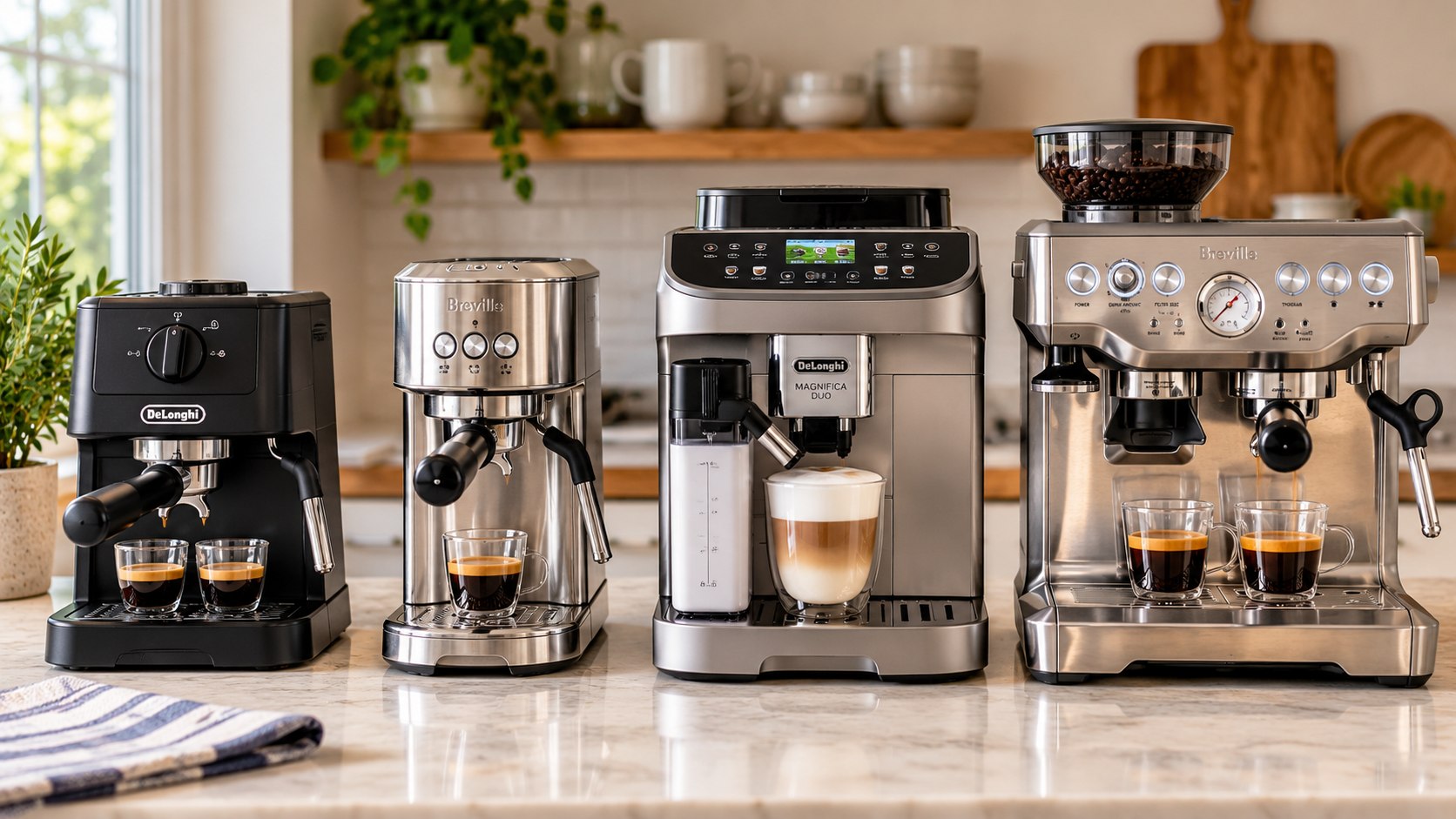
If you’re buying your first espresso machine, start by deciding how much involvement you want.
Choose a beginner-friendly semi-automatic machine if you’re willing to learn a few preparation steps and want some control over your espresso.
Choose a fully automatic machine if you want espresso-based drinks without handling most of the brewing process.
Consider a capsule-based system if straightforward operation and convenience matter more than traditional espresso preparation.
You don’t need premium equipment to begin enjoying espresso at home.
But you should understand what the machine requires before you buy it.
What Makes an Espresso Machine Good for Beginners?
A beginner-friendly machine should make it reasonably easy to prepare a satisfying drink and repeat the process consistently.
That doesn’t necessarily mean it has to do everything automatically.
A straightforward semi-automatic machine may be perfectly approachable for someone interested in learning.
Meanwhile, a sophisticated machine with extensive menus and settings may feel complicated even if much of the brewing process is automated.
I would focus on five qualities:
- Clear controls: You should be able to understand how to prepare your usual drink.
- Forgiving operation: Small beginner mistakes shouldn’t make the machine unnecessarily difficult to use.
- Consistent results: Once you’ve learned the basics, the machine should behave predictably.
- Manageable cleaning: Routine maintenance shouldn’t become an unpleasant surprise.
- A complete, affordable setup: The machine and any necessary equipment should fit your budget.
These qualities matter more to a first-time buyer than an impressive list of advanced features.
How Much Do You Actually Want to Learn?
This is the first decision worth making.
Some people are curious about how espresso works. They enjoy learning a process and improving their results over time.
Others simply want a satisfying espresso, latte, or cappuccino.
Neither approach is better.
If You Enjoy Learning Something New
A semi-automatic machine can be a rewarding choice.
You’ll generally grind coffee, prepare the portafilter, and operate the machine. You may also learn how to steam milk.
The process takes practice, but you don’t need to master every technique immediately.
A machine with straightforward controls and a forgiving brewing setup can make learning less frustrating.
If You Mainly Want the Finished Drink
A fully automatic machine may make more sense.
Many models grind beans and prepare espresso with relatively little involvement. Some also handle milk-based drinks.
You’ll still need to refill supplies, empty used grounds, and maintain the equipment, but the daily preparation process can be simpler.
If You Want the Fewest Preparation Steps
A capsule-based system may be worth considering.
These machines generally require little technique and can be convenient for occasional use.
However, capsule prices, drink selection, and ongoing waste deserve consideration.
Not every capsule system produces espresso using the same brewing method as traditional equipment.
Choose the experience you want rather than assuming one type is automatically superior.
Why Some Espresso Machines Are Easier to Learn
Not every semi-automatic espresso machine expects the same level of skill.
Some are designed to help beginners prepare satisfying drinks while they learn. Others provide greater control but require more careful preparation.
A few features can make a meaningful difference.
Pressurized Filter Baskets
Some beginner-oriented machines include pressurized filter baskets.
These can be more forgiving of variations in coffee grind and preparation than traditional non-pressurized baskets.
That can make getting started easier, particularly if you don’t yet own a specialized espresso grinder.
However, pressurized baskets generally offer less opportunity to fine-tune extraction.
They’re a useful beginner feature, not a requirement for everyone.
Automatic Shot Controls
Some machines allow you to select a preset espresso volume rather than manually stopping every extraction.
That can simplify the routine while you’re learning.
It doesn’t eliminate the importance of coffee preparation, but it reduces one task you need to manage.
Integrated Grinders
A machine with a built-in grinder can simplify equipment shopping and reduce the number of separate appliances on your counter.
However, an integrated grinder isn’t automatically better than a separate one.
Consider its adjustment range, ease of cleaning, and whether it meets your needs.
Assisted Milk Steaming
If you enjoy lattes and cappuccinos, assisted milk steaming can reduce the learning involved in preparing milk.
Traditional steam wands give you more direct control but require practice.
Neither approach is right for everyone.
Your First Week With an Espresso Machine
One useful way to evaluate a machine is to imagine your first week of ownership.
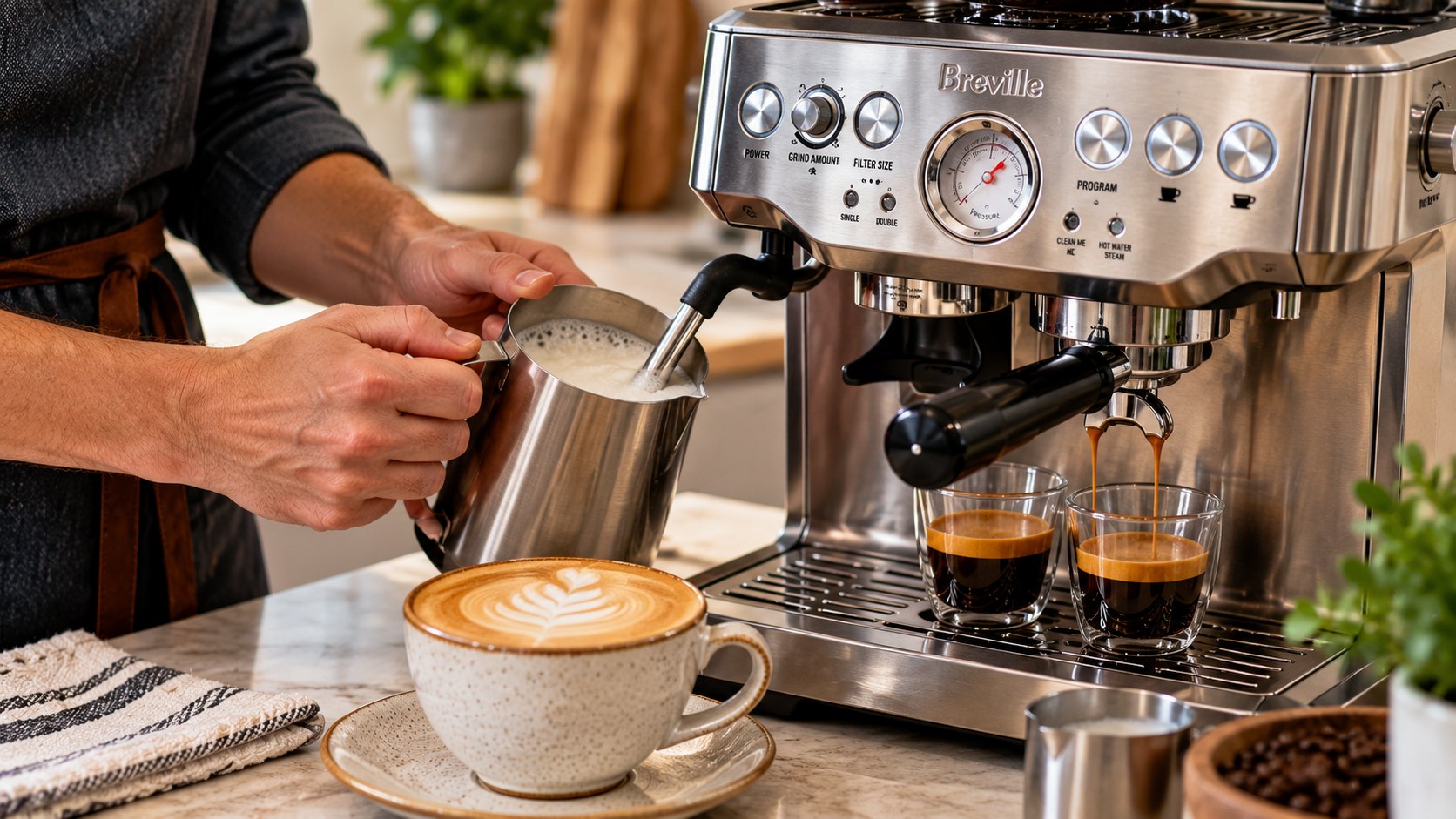
With a beginner-friendly semi-automatic machine, you may spend the first few days learning how much coffee to use, how to prepare the portafilter, and how to recognize a satisfying result.
Some drinks may turn out better than others.
That’s normal when learning traditional espresso preparation.
A machine with straightforward controls and clear instructions can make that process less frustrating.
With a fully automatic machine, you may spend more time exploring drink settings and learning the cleaning routine than practicing brewing technique.
With a capsule system, the initial learning process may be simpler still.
The question is whether those first few days sound interesting or inconvenient to you.
Choose a machine whose learning process you’re willing to experience—not one you hope you’ll somehow avoid.
How Much Should a Beginner Spend?
There’s no universal price for a good first espresso machine.
For someone interested in traditional espresso, the approximate $200–$500 range is a reasonable place to begin comparing entry-level semi-automatic equipment.
But the complete setup may cost more if a separate grinder is required.
Less expensive machines and capsule systems may be suitable for buyers with limited budgets.
More expensive machines may offer integrated grinders, assisted preparation, automated milk systems, or other conveniences.
Those features can be worthwhile, but they aren’t essential for everyone.
If you’re considering spending $1,000 or more on your first machine, make sure you can identify exactly what the additional money provides.
A beginner doesn’t necessarily benefit from advanced equipment simply because it’s more expensive.
Don’t Let the Grinder Become an Afterthought
If you’re considering a semi-automatic machine, pay attention to its grinding requirements.
Traditional espresso generally benefits from a consistent, suitably fine grind.
Some beginner machines use pressurized filter baskets that are more forgiving of grind variations.
Machines using non-pressurized baskets generally place greater demands on grind quality and adjustment.
If your machine doesn’t include a suitable grinder, you may need to purchase one separately.
That expense should be part of your initial budget.
A seemingly affordable machine isn’t necessarily an affordable complete setup.
What If You Mostly Want Lattes or Cappuccinos?
For many beginners, espresso is only part of the drink.
If you mainly enjoy cappuccinos and lattes, milk preparation may be one of the most important features to compare.
A traditional steam wand gives you control over heating and texturing milk, but it requires practice.
Assisted or automatic milk systems can make the process easier.
However, those systems may add to the machine’s price and cleaning requirements.
If you want a latte every morning without learning how to steam milk, paying for convenience may be worthwhile.
If you’re curious about the process, a traditional steam wand may be perfectly appropriate.
Don’t spend extra for advanced espresso controls while overlooking the feature you’ll use for your favorite drinks.
Easy to Use Doesn’t Always Mean Easy to Own
A machine may be simple to operate but require considerable cleaning or maintenance.
This is particularly important when comparing fully automatic machines.
Some automate much of the brewing process but require regular attention to internal components, milk systems, and cleaning programs.
Semi-automatic machines generally involve more preparation and immediate cleanup, but many of their components are accessible.
Before buying, find out:
- What needs to be cleaned after each use
- Whether the milk system requires special attention
- How often descaling or other maintenance is recommended
- Whether replacement parts and service are available
- What cleaning supplies the machine requires
A beginner-friendly machine should fit your willingness to maintain it—not just your willingness to operate it.
Five Mistakes First-Time Espresso Buyers Should Avoid
1. Buying a Machine That’s Too Complicated
Advanced brewing controls can be valuable, but they aren’t necessary for everyone.
Don’t pay for features you’re unlikely to understand or use.
2. Buying the Cheapest Machine Without Considering the Complete Setup
A low purchase price may be attractive, but a separate grinder, accessories, or other equipment can increase the total expense.
Compare what you need to make the machine useful.
3. Expecting Traditional Espresso to Require No Practice
A semi-automatic machine involves learning.
That doesn’t mean it’s too difficult for beginners. It simply means the process may take some patience.
4. Overlooking Cleaning and Maintenance
A machine that’s frustrating to maintain may quickly lose its appeal.
Understand the routine before purchasing.
5. Choosing Equipment for Drinks You Rarely Make
If you mainly drink lattes, focus on milk preparation.
If you prefer straight espresso, advanced milk features may not matter.
Buy for the drinks you actually enjoy.
Best Espresso Machines for Beginners: What We Would Consider
Once you’ve decided what kind of experience you want, it’s time to compare a small number of machines.
Our recommendations will focus on practical beginner needs rather than simply highlighting the most expensive or feature-rich equipment.
A Budget-Friendly Espresso Machine for Beginners
Best for: Someone who wants to explore espresso at home without making a substantial initial investment.
What matters: Straightforward operation, realistic brewing expectations, manageable cleaning, and the cost of necessary accessories.
Selected machine: De’Longhi Stilosa Compact Manual Espresso Machine. This is a relatively affordable way to explore hands-on espresso and milk drinks. Its manual steam wand requires practice, and there is no built-in grinder. A suitable grinder and realistic expectations about the learning process matter as much as the machine price. View the De’Longhi Stilosa on Amazon.
A Semi-Automatic Espresso Machine That’s Easy to Learn
Best for: Someone interested in traditional espresso preparation who wants a manageable learning experience.
What matters: Clear controls, forgiving operation, consistent brewing, and suitable grinder options.
Selected machine: Breville Bambino BES450BSS. Its compact footprint, quick heating, and straightforward controls make it worth comparing for someone interested in learning traditional espresso. Milk steaming is manual, and a capable espresso grinder is a separate expense. View the Breville Bambino on Amazon.
A Fully Automatic Espresso Machine for Beginners
Best for: Someone who wants espresso regularly but prefers the machine to handle most of the preparation.
What matters: Simple drink selection, consistency, cleaning requirements, and long-term ownership costs.
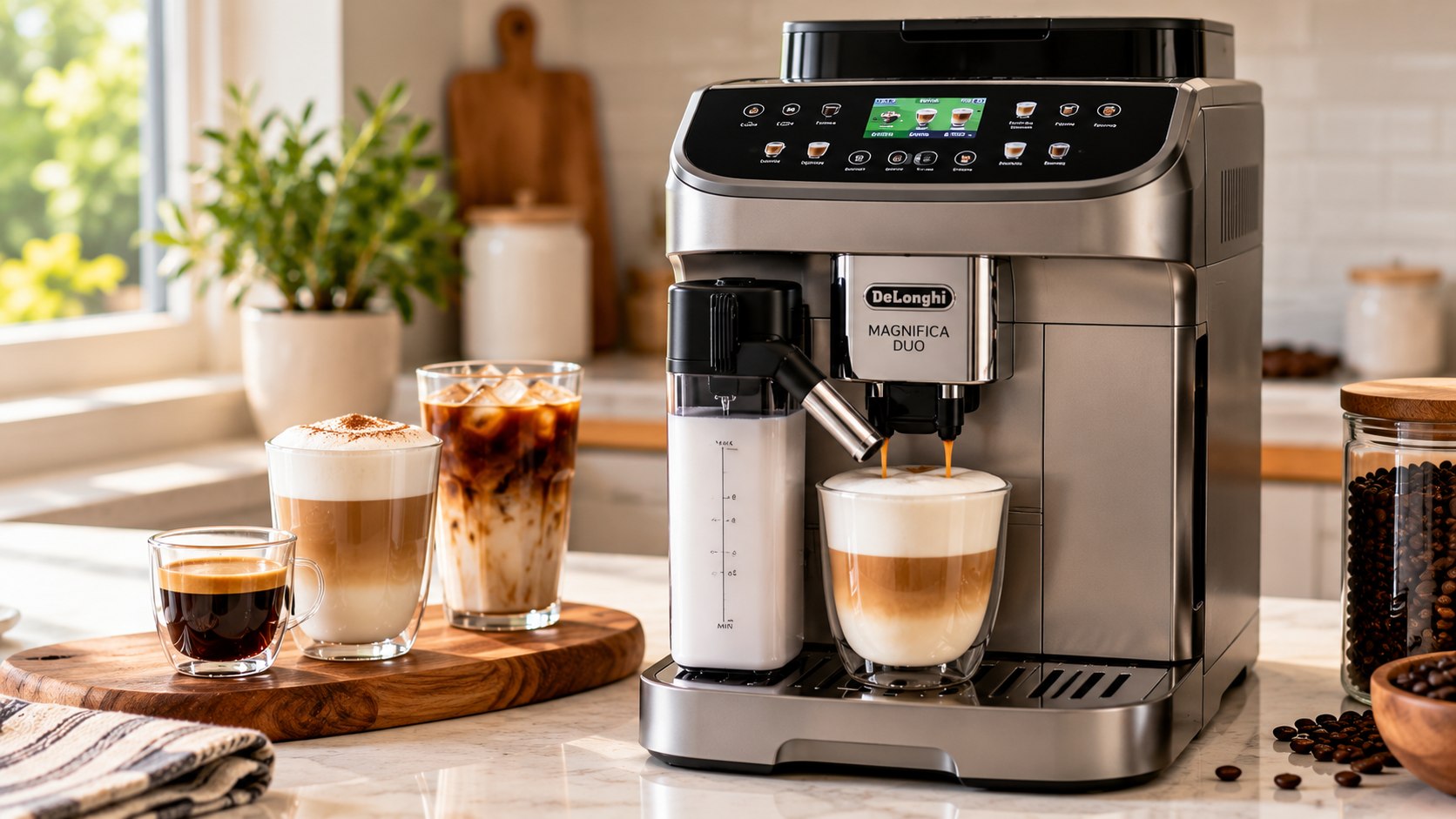
Selected machine: Philips 3300 Series LatteGo (EP3341/50). A bean-to-cup option with integrated grinding and an automated milk system for people who want espresso-based drinks with fewer preparation steps. Its convenience comes with a higher purchase price and regular cleaning of the brewing and milk components. Check the specific drink menu and maintenance instructions before buying. View the Philips 3300 LatteGo on Amazon.
An Espresso Machine for Beginners Who Love Lattes
Best for: Someone whose main interest is preparing cappuccinos, lattes, and other milk-based drinks.
What matters: Easy milk preparation, straightforward operation, consistent results, and manageable cleanup.
Selected machine: Breville Barista Express BES870XL. An option for a beginner who wants to learn how to make lattes, rather than automate them. It combines an integrated grinder with manual espresso preparation and a steam wand, reducing the need for a separate grinder but not the practice involved in dosing, extraction, and milk texturing. It is not the simplest choice for someone who wants one-touch milk drinks. View the Breville Barista Express on Amazon.
These examples represent different routines, not a ranking by price. Product prices, sellers, availability, and return policies can change; check each listing before purchasing.
Which Beginner Espresso Machine Fits Your Routine?
| Your priority | What to consider | Main trade-off |
|---|---|---|
| Lowest initial expense | Entry-level or capsule-based machine | Potential limitations or ongoing capsule costs |
| Learning traditional espresso | Beginner-friendly semi-automatic | More preparation and practice |
| Minimal daily preparation | Fully automatic machine | Higher cost and internal maintenance |
| Easy lattes and cappuccinos | Assisted or automatic milk preparation | Additional features and cleaning |
Do You Need to Become an Espresso Enthusiast?
No.
There’s nothing wrong with enjoying the process of grinding coffee, adjusting settings, and refining your technique.
But there’s also nothing wrong with wanting a machine that makes a drink you enjoy without much effort.
You don’t have to treat espresso as a hobby to justify buying an espresso machine.
What matters is whether the equipment makes your daily coffee routine better.
A simpler machine you use regularly may provide far more satisfaction than an elaborate setup that spends most of its time on the counter.
Our Recommendation
If you’re interested in learning traditional espresso, begin with a straightforward semi-automatic machine that offers manageable controls and a forgiving learning experience.
Allow room in your budget for a suitable grinder if necessary.
If you primarily want convenience, consider a fully automatic machine or capsule-based system, depending on your budget and expectations.
If you mainly drink lattes or cappuccinos, make milk preparation one of your first considerations.
And if you’re uncertain how much you’ll enjoy making espresso at home, there’s no reason to begin with premium equipment.
You don’t need to become an espresso expert to enjoy espresso at home. You just need a machine that makes the drinks you like, fits your mornings, and doesn’t ask more of you than you’re willing to give.
Related Guides
- How Much Should You Spend on an Espresso Machine?
- Automatic vs. Semi-Automatic Espresso Machines
- Espresso Machine vs. Coffee Maker
As an Amazon Associate, Coffee for Real Life earns from qualifying purchases.
Keep exploring: Browse all Coffee Buying Guides